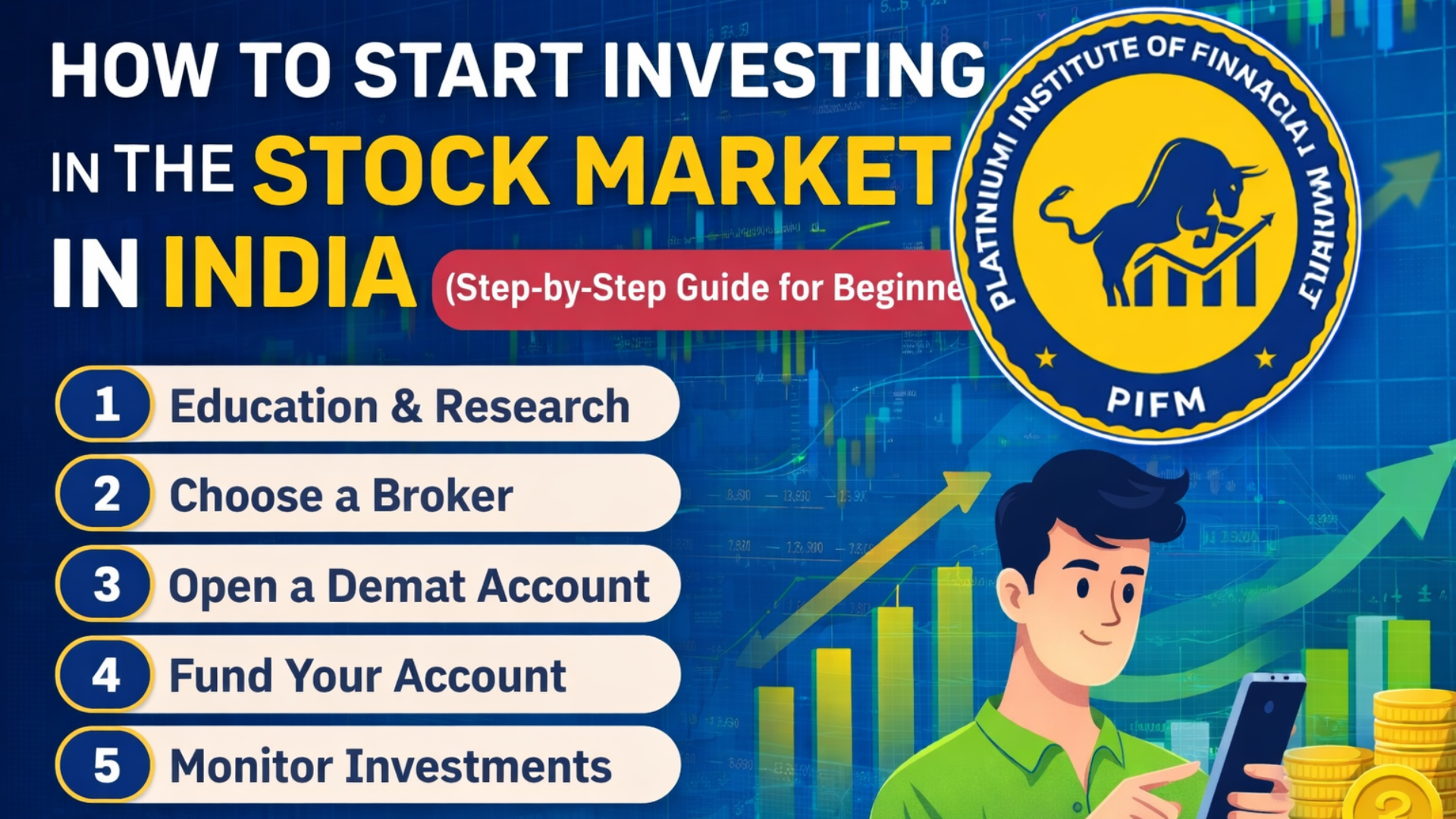
How to Start Investing in the Stock Market in India (Step-by-Step Guide for Beginners)
Investing in the stock market is one of the most powerful ways to build long-term wealth in India. However, for beginners, the stock market often feels confusing, risky, and overwhelming. Terms like shares, Demat account, IPOs, indices, and volatility can make people hesitate to take the first step.
This is why many beginners look for guidance from a stock market institute in Delhi or search online for a stock market institute near me to gain structured knowledge before investing.
The truth is—stock market investing is not gambling if done with the right knowledge, discipline, and planning. This step-by-step guide will help you understand exactly how to start investing in the Indian stock market, even if you have zero prior experience.
Step 1: Understand What Stock Market Investing Really Is
When you invest in the stock market, you are buying ownership in a company. These ownership units are called shares or stocks. As the company grows and earns profits, the value of your shares may increase, and you may also receive dividends.
In India, stocks are traded mainly on two exchanges:
-
BSE (Bombay Stock Exchange)
-
NSE (National Stock Exchange)
Stock market investing is best suited for:
-
Long-term wealth creation
-
Beating inflation
-
Achieving financial goals like retirement, education, or buying a house
Unlike trading, investing focuses on holding quality stocks for years, not days. This long-term approach is what most share market courses in Delhi teach to beginners before moving to advanced strategies.
Step 2: Set Clear Financial Goals
Before you invest a single rupee, ask yourself:
-
Why am I investing?
-
For how long can I stay invested?
-
How much risk can I handle?
Examples of investment goals:
-
Retirement planning (15–25 years)
-
Child’s education (10–15 years)
-
Wealth creation (long term)
-
Passive income (dividends)
Your goals will decide:
-
Which stocks to buy
-
How much risk to take
-
Whether to focus on growth stocks or stable companies
Professional guidance from a share market training institute near me can help beginners define realistic goals and avoid emotional decisions.
Step 3: Learn the Basics of the Indian Stock Market
You don’t need to become an expert overnight, but basic knowledge is essential. Focus on understanding:
-
What are shares, IPOs, and indices (Nifty 50, Sensex)?
-
Difference between large-cap, mid-cap, and small-cap stocks
-
What is market volatility?
-
Difference between investing and trading
Many beginners enroll in stock market courses in Delhi or a stock trading academy near me to build strong fundamentals instead of relying on random tips.
Step 4: Open a Demat and Trading Account
To invest in the Indian stock market, you need:
-
Demat Account – Stores your shares electronically
-
Trading Account – Used to buy and sell shares
-
Bank Account – Linked for fund transfers
You can open these accounts through:
-
Stockbrokers (Zerodha, Upstox, Angel One, etc.)
-
Banks offering Demat services
Documents required:
-
PAN card
-
Aadhaar card
-
Bank account details
-
Passport-size photo
Most accounts can now be opened 100% online, making it easier for beginners learning through a stock market training institute near me.
Step 5: Start With Mutual Funds or Index Funds (Optional but Smart)
If you are extremely new and hesitant, starting with mutual funds or index funds is a great option.
Why?
-
Professionally managed
-
Lower risk than individual stocks
-
Ideal for long-term beginners
Popular beginner choices:
-
Nifty 50 Index Fund
-
Sensex Index Fund
-
Large-cap equity mutual funds
You can invest via SIP (Systematic Investment Plan) starting from as low as ₹500 per month, a strategy commonly recommended in share market courses in Delhi.
Step 6: Learn How to Analyze Stocks Before Investing
Blind investing is dangerous. Before buying any stock, learn fundamental analysis, which includes:
-
Company business model
-
Revenue and profit growth
-
Debt levels
-
Return on Equity (ROE)
-
Management quality
-
Industry growth potential
Avoid investing just because:
-
A friend suggested it
-
It’s trending on social media
-
A YouTube video promised quick profits
Quality education from a reputed share market institute near me or stock market institute in Delhi can help investors make informed decisions.
Step 7: Start Small and Be Consistent
You do not need a large amount to start investing. Many beginners make the mistake of waiting for “perfect timing” or large capital.
Start with:
-
₹5,000 – ₹10,000 per month
-
1–3 quality stocks or funds
-
Long-term mindset
Consistency matters more than timing. This principle is strongly emphasized in most stock market courses in Delhi and even in beginner trading course in Delhi programs.
Step 8: Diversify Your Investments
Never put all your money into one stock or one sector.
Diversification means:
-
Investing in multiple companies
-
Different sectors (IT, Banking, FMCG, Pharma, etc.)
-
Mixing growth and stable stocks
Diversification is a core concept taught by every professional stock market training institute near me to reduce risk and protect capital.
Step 9: Control Emotions and Avoid Common Mistakes
The biggest enemy of investors is emotion.
Common beginner mistakes:
-
Panic selling during market falls
-
Overreacting to news
-
Chasing hot stocks
-
Checking portfolio daily
-
Expecting quick profits
Successful investors stay calm, disciplined, and patient—skills that are developed through experience or guided learning at a stock trading academy near me.
Step 10: Keep Learning and Reviewing Your Portfolio
Stock market investing is a journey, not a one-time activity.
Make it a habit to:
-
Review your portfolio every 6–12 months
-
Track company performance
-
Upgrade your knowledge regularly
-
Learn from mistakes, not repeat them
Many investors choose structured education after checking stock market courses in Delhi fees to ensure they receive value-driven learning.
Final Thoughts
Starting investing in the stock market in India is easier than ever—but success depends on knowledge, discipline, and long-term thinking.
Remember:
-
Start early
-
Invest regularly
-
Focus on quality
-
Avoid shortcuts
-
Think long term
Whether you are learning independently or through a share market institute near me, the stock market rewards patience and preparation. With the right mindset and education, it can become one of the most powerful tools for financial freedom.